
Tuesday, May 31, 2011
Cooking Catch-up
Here's a small selection of stuff in my cooking backlog. Let's see if I can keep more up-to-date from now on...


Sunday, May 22, 2011
Coca de Recapte - Catalan Flatbread
Well! This is my first post in a LONG time. It's not that I haven't been cooking, just too disorganised to blog. Maybe I'll upload some photos to prove this. Today's dish is a catalan flatbread that I made with the help of Mr and Mrs Barcelona, who could also verify its authenticity.
The recipe for the coca de recapte dough came from Frank Camorra and Richard Cornish's "Rustica" with some minor clarifications and my ever perceptive notes. :-) The ingredients for the flatbread are:

Put the yeast into the lukewarm water, dissolve then mix in the sugar, salt and olive oil. Cover and set aside in a warm place for half an hour. Don't be tempted to add more yeast like I was as you are making a flatbread, not a focaccia... Combine the flour and the wet ingredients in a bowl using a fork and once it has come together, tip out onto a clean bench. Knead by hand for 10 minutes until smooth. Although you could be a big namby-pamby and use a mixer with a dough hook, kneading let's you release some frustration and is good for the soul, so do it by hand! The dough is a little wet but not so sticky that you need to flour the bench. After the initial kneading, let it rest covered for 5-10 minutes and then knead for another 5 minutes. Cover and rest another 30 minutes and then it's ready to go. Divide into 6 portions, roll out into "tongues" and let them sit for a while on oiled baking paper that's been given a good sprinkle of polenta. The polenta gives the bottom of the flatbread a nice crunch and also prevents sticking. If the dough rises after 10 minutes, flatten it out a bit more as you want it fairly thin so that it bakes crisp. You might like to poke the tongues with a fork before loading the topping so that it doesn't puff up while cooking.
In between kneading the dough, prepare the toppings. You can use pretty much anything but it's nice to caramelise some onions and cook with thinly sliced garlic, a little chilli and bay leaves in a frypan with a pinch of salt. Make sure you add some of Mr Barcelona's signature herb: thyme. Cover and cook for 15 minutes. Other toppings might be best roasted with salt, pepper and olive oil.

Whatever you choose for your toppings, don't overload the tongues. Sometime less is more. Cook in a preheated oven at 220C for 15 minutes until nicely browned. Drizzle with a good olive oil and top with some torn parsley. In Barcelona, they serve coca de recapte cold but I think they are best eaten straight from the oven or at least while they are still warm. Here are some alternative toppings, although the list is endless:

The recipe for the coca de recapte dough came from Frank Camorra and Richard Cornish's "Rustica" with some minor clarifications and my ever perceptive notes. :-) The ingredients for the flatbread are:
- 500g plain flour - no need for fancy flour as catalan peasants would never have used 00 flour
- 1 packet dried yeast, 7g
- 1/2 teaspoon sugar
- 1/2-1 teaspoon sea salt
- 330ml lukewarm water
- 2 teaspoons olive oil

Put the yeast into the lukewarm water, dissolve then mix in the sugar, salt and olive oil. Cover and set aside in a warm place for half an hour. Don't be tempted to add more yeast like I was as you are making a flatbread, not a focaccia... Combine the flour and the wet ingredients in a bowl using a fork and once it has come together, tip out onto a clean bench. Knead by hand for 10 minutes until smooth. Although you could be a big namby-pamby and use a mixer with a dough hook, kneading let's you release some frustration and is good for the soul, so do it by hand! The dough is a little wet but not so sticky that you need to flour the bench. After the initial kneading, let it rest covered for 5-10 minutes and then knead for another 5 minutes. Cover and rest another 30 minutes and then it's ready to go. Divide into 6 portions, roll out into "tongues" and let them sit for a while on oiled baking paper that's been given a good sprinkle of polenta. The polenta gives the bottom of the flatbread a nice crunch and also prevents sticking. If the dough rises after 10 minutes, flatten it out a bit more as you want it fairly thin so that it bakes crisp. You might like to poke the tongues with a fork before loading the topping so that it doesn't puff up while cooking.
In between kneading the dough, prepare the toppings. You can use pretty much anything but it's nice to caramelise some onions and cook with thinly sliced garlic, a little chilli and bay leaves in a frypan with a pinch of salt. Make sure you add some of Mr Barcelona's signature herb: thyme. Cover and cook for 15 minutes. Other toppings might be best roasted with salt, pepper and olive oil.

Whatever you choose for your toppings, don't overload the tongues. Sometime less is more. Cook in a preheated oven at 220C for 15 minutes until nicely browned. Drizzle with a good olive oil and top with some torn parsley. In Barcelona, they serve coca de recapte cold but I think they are best eaten straight from the oven or at least while they are still warm. Here are some alternative toppings, although the list is endless:
- za'atar and labneh
- mushroom, garlic and nutmeg
- thinly sliced potato with rosemary and sea salt (some caramelised onions would also be nice)
- roast capsicum, eggplant and tomato
- tomato, torn zucchini flowers and ricotta (add the flowers after cooking)
- roasted kumera, cumin seed and pesto

Monday, October 5, 2009
Potato Salad and Mushroom San Choy Bao
In an attempt to spice up some leftover mashed potatoes, I added mushrooms fried in garlic and some lemon rind to some lettuce leaves. Unfortunately, although the lettuce I used (no idea what it is called) looked nice like little soup spoons, they were a little bitter and quite tough so I wouldn't recommend them. Stick with cos lettuce, you'll be a lot happier.


Apple and Blackberry Crumble
This turned out surprisingly well considering I'm pretty rubbish at baking. It came from a newspaper clipping I thieved from a cafe so it's heritage was probably one of the weekend papers.
Filling:
8 large apples (mix of golden delicious and granny smith) - peeled, cored and roughly chopped into wedges
150g frozen blackberries (thawed) or other berries
1 vanilla bean
300g sugar
100m water
1 lemon zest
Crumble topping:
100g plain flour (give or take - not sure exactly how much)
100 to 120g of cold butter diced
1 teaspoon ground cinnamon
100g rolled oats
50g almond meal
100g brown or demerara sugar
2 teaspoons baking powder
100g nuts (almond slithers or macadamia or walnuts or pecans ...)
Put the sugar, water, lemon zest and vanilla bean seeds into a medium saucepan. Bring to a boil then turn down and simmer for 5 minutes.
Add the apples and cook for 10-15 minutes until soft on a low to medium heat. Strain away the liquid and then add to the bottom of a 25cm round cake tin with the blackberries. Pack it down a little.
Rub the flour and butter together in your finger tips to work the mixture until it forms a lumpy consistency. Don't overwork or it won't be crunchy. Add the cinnamon, rolled oats, almond meal, brown sugar, baking powder and nuts. Mix together until it forms clumps. Put this mixture
on top of the apple blackberry mixture in the tin.
Place into a pre-heated oven at 220C (200C if fan forced) for 20-25 minutes until golden on top.
Some variants I found when doing a bit of poking around on the interweb:
- Rhubarb & apple crumble: Omit the cinnamon. Replace the rolled oats with 35g (1/2 cup) shredded coconut. Reduce the apples to 2 (about 210g each). Add 1 bunch (about 550g) rhubarb, leaves discarded, ends trimmed, washed and cut into 5cm lengths, with the apples in step 3. Replace the lemon juice with 1 tbs fresh orange juice.
- Peach & walnut crumble: Replace the ground cinnamon with ground nutmeg. Replace the rolled oats with 55g (1/2 cup) good-quality walnut halves, roughly chopped. Replace the apples with 6 (about 1kg) freestone peaches. Cut a small cross into the base of each peach and place in a large heatproof bowl. Cover with boiling water and set aside for 5 minutes. Remove the peaches from the water and use a small sharp knife to peel and discard the skin. Cut the peaches in half, remove the stones and cut each piece in half lengthways. Place the peach quarters, cut-side up, in the greased dish. Omit the lemon juice.


Blood Orange and Blossom Cordial
This recipe is modified from Fouad Mum's recipe he posted on The Food Blog. Although I didn't have real orange blossoms to work with, in my first attempt I tried this with hand squeezed oranges. The next time round, I decided to snazz it up even more and used blood oranges to get the beautiful red colour. Here's the recipe:
4 cups of blood orange juice (you'll need somewhere between 3 to 3.5 kg of oranges)
8 cups of boiling water
2 tsp orange blossom water
1.5 kg of sugar (and even a little more might not go astray!)
1 tsp citric acid
The rind of 4 lemons plus their juice
Dissolve the sugar in the boiling water and keep boiling for another 5-10 minutes with the lemon rind and then let it steep for a further 5 minutes. Let it cool a bit so you don't cook the orange juice so you might as well juice the oranges in the meantime.
Juice the oranges to make at least 4 cups. I double-strained the juice through a fine sieve to remove most of the orange bits. No point wasting the lemons so juice those and add that in as well.
Add the blood orange juice, lemon juice and citric acid to the sugar mix and stir well. Finally, add the orange blossom water. You'll find the orange blossom water contains a lot of oils so it floats and doesn't mix too well so you need to be aware of this otherwise the first bottle of cordial will have much more orange blossom water in it that the last bottle.
I sterilised the bottles in the oven by placing them in a cool oven, bringing the heat up to 160C and left it there for 5 minutes before turning off the heat and letting the bottles cool. The bottle tops were sterilise separately by boiling them in water for 10 minutes.
I found that the cordial needed to be added at a ratio of about 1 to 4 (or even 3) with water as it is not anywhere as sweet as store bought cordials. It's good with lots of ice.
Some things to try next time are: use mandarins or tangelos instead of oranges, maybe try pureed and then strained mangoes or strawberries when they are in season, oh, and what about blood plums. The possibilities are endless!


Summer Lunch
After a long respite, I'm finally back and posting some meals I cooked in the past few months. Summer kicked off with a party for plenty and here were some of the dishes we ate.
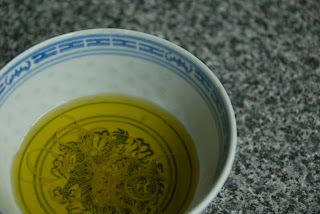
In order of appearance, there is Lemon Infused Olive Oil, Herb Coated Labna, Dukkah, Baba Ghanouj, Carrot and Orange Salad, Spinach and Ricotta Roll, Flourless Orange and Almond Cake.
Baba Ghanouj
The recipe for baba ghanouj comes from the Lebanese episode of Food Safari. I was a little skeptical that just charring the eggplant over an open flame would cook it properly but it gave the dip a smokey taste which went well with the creamy texture.
2-3 medium sized eggplant
1½ tbsp tahini
1 tbsp lemon juice
1-2 cloves garlic
2 tsp salt
1 tbsp extra virgin olive oil
1 tsp paprika
Parsley, finely chopped
Tomato, finely diced
Grill the whole eggplants over an open gas flame, turning with tongs until the skin is evenly blackened. Do worry if it looks a mess, you'll peel the charred skin off shortly. Soak in cold water for about 10 min to cool.
After soaking, peel off the blacked skin and leave to drain in a colander for 15 minutes. Whizz up the pulp in a food processor with tahini, lemon, garlic and salt until creamy.
Place the mixture in a serving bowl and make a well in the centre just deep enough for the oil to be poured in. Sprinkle paprika, parsley and tomato on top.
Carrot and Orange Salad
This recipe came from the Moroccan episode of Food Safari. I had great hopes for this but it turned out too sweet and really didn't get much attention from anyone at the lunch so I don't know if I'd recommend it. If you are interested, you can find the recipe here.
Spinach and Ricotta Roll
Can't remember where I got this recipe from. I'll have to do a search.
Flourless Orange and Almond Cake
This comes from the Jewish episode of Food Safari. It's an amazingly moist flourless cake great for the gluten intolerant and lovers of desserts. The following is lifted from the Food Safari website with some minor comments added:
2 oranges
6 eggs
250g caster sugar
250g almond meal
1tsp baking powder
Extra caster sugar for dusting before baking
Icing sugar for dusting after baking
Margarine or oil spray (for greasing the pan)
Wash oranges and place unpeeled, in a pot of boiling water for 2 hours. I suspect that it could be cooked for much shorter but haven't tried this. Drain the water and allow the oranges to cool. This can be done ahead of time.
Preheat oven to 190°C.
Break 6 eggs into a mixing bowl or blender. Add caster sugar and beat or blend together. Place the two oranges into the egg mix. Break up the oranges and then blend together to a smooth consistency. Add the almond meal and baking powder and blend.
Grease a 20 cm spring form baking pan with margarine (or vegetable oil spray) and dust with caster sugar. Pour batter into the pan and sprinkle caster sugar on top and bake for 1 hour to an hour and a half or until the top is golden brown.
It's best to leave the cake overnight to set, but people don't often tell you this step. Dust with sugar before serving.


In order of appearance, there is Lemon Infused Olive Oil, Herb Coated Labna, Dukkah, Baba Ghanouj, Carrot and Orange Salad, Spinach and Ricotta Roll, Flourless Orange and Almond Cake.
Baba Ghanouj
The recipe for baba ghanouj comes from the Lebanese episode of Food Safari. I was a little skeptical that just charring the eggplant over an open flame would cook it properly but it gave the dip a smokey taste which went well with the creamy texture.
2-3 medium sized eggplant
1½ tbsp tahini
1 tbsp lemon juice
1-2 cloves garlic
2 tsp salt
1 tbsp extra virgin olive oil
1 tsp paprika
Parsley, finely chopped
Tomato, finely diced
Grill the whole eggplants over an open gas flame, turning with tongs until the skin is evenly blackened. Do worry if it looks a mess, you'll peel the charred skin off shortly. Soak in cold water for about 10 min to cool.
After soaking, peel off the blacked skin and leave to drain in a colander for 15 minutes. Whizz up the pulp in a food processor with tahini, lemon, garlic and salt until creamy.
Place the mixture in a serving bowl and make a well in the centre just deep enough for the oil to be poured in. Sprinkle paprika, parsley and tomato on top.
Carrot and Orange Salad
This recipe came from the Moroccan episode of Food Safari. I had great hopes for this but it turned out too sweet and really didn't get much attention from anyone at the lunch so I don't know if I'd recommend it. If you are interested, you can find the recipe here.
Spinach and Ricotta Roll
Can't remember where I got this recipe from. I'll have to do a search.
Flourless Orange and Almond Cake
This comes from the Jewish episode of Food Safari. It's an amazingly moist flourless cake great for the gluten intolerant and lovers of desserts. The following is lifted from the Food Safari website with some minor comments added:
2 oranges
6 eggs
250g caster sugar
250g almond meal
1tsp baking powder
Extra caster sugar for dusting before baking
Icing sugar for dusting after baking
Margarine or oil spray (for greasing the pan)
Wash oranges and place unpeeled, in a pot of boiling water for 2 hours. I suspect that it could be cooked for much shorter but haven't tried this. Drain the water and allow the oranges to cool. This can be done ahead of time.
Preheat oven to 190°C.
Break 6 eggs into a mixing bowl or blender. Add caster sugar and beat or blend together. Place the two oranges into the egg mix. Break up the oranges and then blend together to a smooth consistency. Add the almond meal and baking powder and blend.
Grease a 20 cm spring form baking pan with margarine (or vegetable oil spray) and dust with caster sugar. Pour batter into the pan and sprinkle caster sugar on top and bake for 1 hour to an hour and a half or until the top is golden brown.
It's best to leave the cake overnight to set, but people don't often tell you this step. Dust with sugar before serving.


Saturday, December 6, 2008
Garden Bean Salad
This is a great recipe that came from the Good Weekend. Blanch the following for about 1-2 minutes each in separate batches:
Make a dressing by finely chopping brown shallots and macerating them in a good red wine vinegar or sherry vinegar for 15 minutes. Give them a good squeeze so that the sharpness of the shallots get broken down. Add a pinch of salt and sugar, olive oil and if you have it, some walnut oil.
Dress the salad and then top with toasted walnuts and goat's curd. If you want to really impress, also top with some edible flowers like bean or pea flowers.

- Broad beans (double shell them after blanching)
- Borlotti beans
- French beans
- Spring onion bulbs
Make a dressing by finely chopping brown shallots and macerating them in a good red wine vinegar or sherry vinegar for 15 minutes. Give them a good squeeze so that the sharpness of the shallots get broken down. Add a pinch of salt and sugar, olive oil and if you have it, some walnut oil.
Dress the salad and then top with toasted walnuts and goat's curd. If you want to really impress, also top with some edible flowers like bean or pea flowers.

Subscribe to:
Posts (Atom)
